Wandermio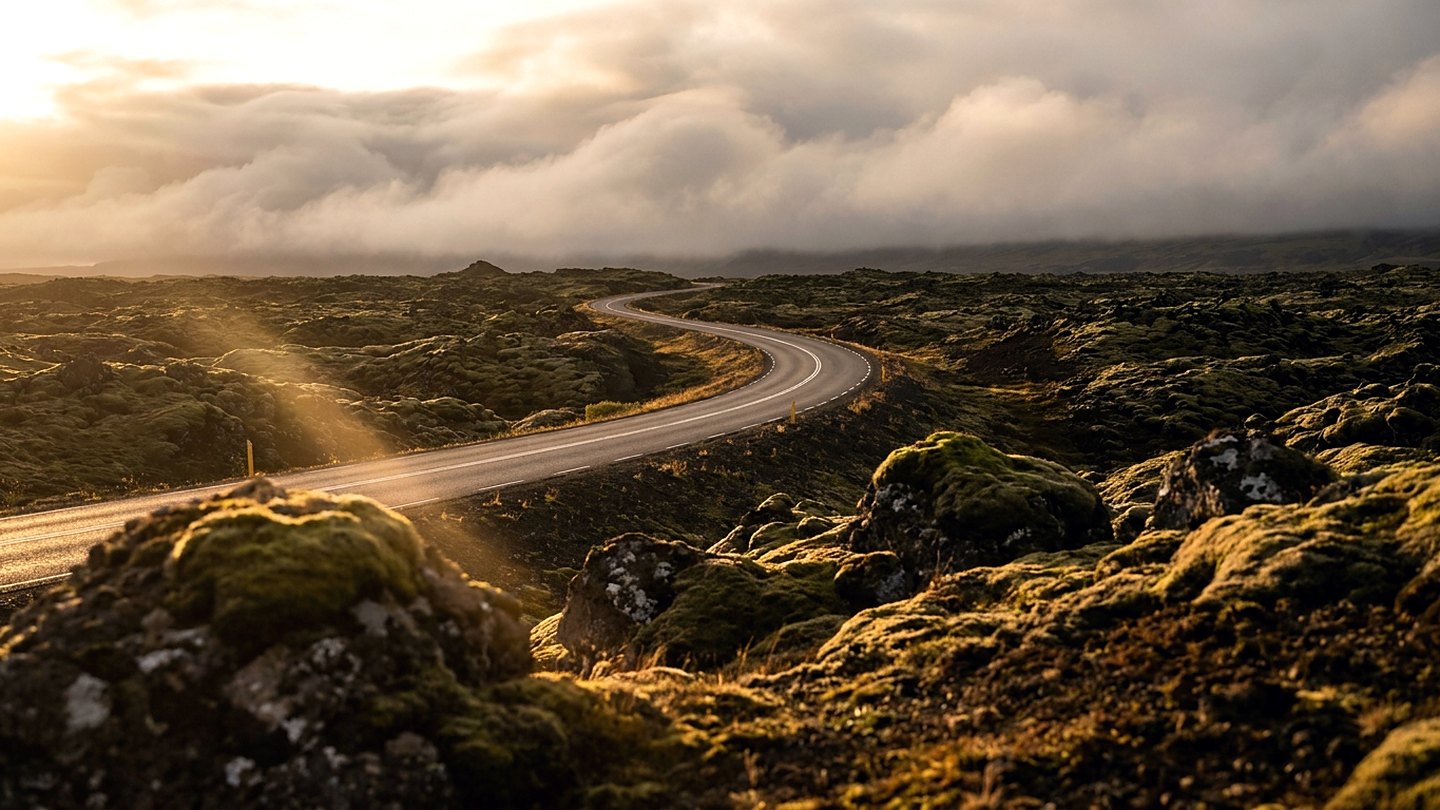
Seven Days on Iceland's Ring Road, Early Summer
Last June I drove Iceland's ring road in seven days, which is either exactly right or slightly rushed depending on who you ask. The loop is one paved highway that goes all the way around the island and returns you to where you started, and the honest thing to say up front is that the driving was the trip. Not the dull space between the good parts. The thing itself.
I had pictured long empty stretches. There are some. What I had not pictured was how often I would stop, or how much of the island happens in the first twenty feet off the shoulder.
The distances are the trip
Numbers first, because they set everything else. The loop runs a little over thirteen hundred kilometers, or roughly eight hundred thirty miles. Driven straight through with no stops it comes to something like seventeen hours. Split across seven days that is two to three hours at the wheel most mornings, which sounds gentle and is, until you add the stopping.
The stopping is the part nobody warns you about. On the south coast I planned a two-hour leg and it took five, not because anything went wrong but because there was a waterfall, and then a field of horses standing in the rain as though they had agreed to it, and then a pullout where the cliff face was loud with nesting birds, and then the light did something and I had to sit for a while.
So my rule by day three was simple: plan half of what seems reasonable. The map scale misleads in both directions. Gaps between towns look enormous and take an hour. Gaps between two waterfalls look tiny and take a morning, because there are nine reasons to pull over in between.
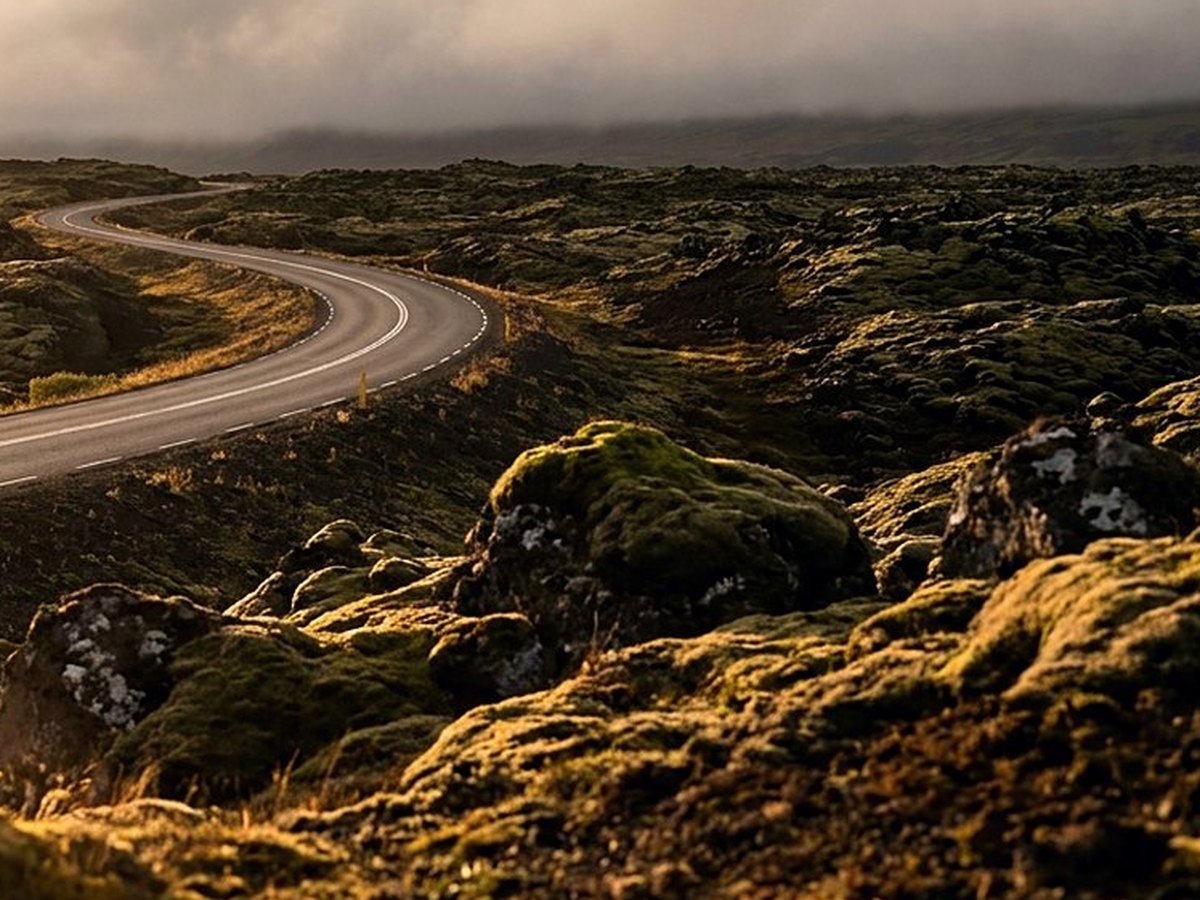
The northeast is where the week changed character for me. Between the lake country and the eastern fjords the road empties out. Forty minutes can pass with nothing but pavement, moss, and a wall of cloud sitting on a ridge to the left. I loved that stretch more than any single sight on the island. There is a particular quiet that comes from having nowhere to be for the next hour.
Weather sets the schedule
Iceland does not really have weather so much as a rotation, and you get all of it before lunch. In one ninety-minute leg east of the big glacier I got flat gray, then hard rain, then a burst of sun so clean the moss turned neon, then wind loud enough that I gave up on the radio and listened to that instead.
Iceland does not really have weather so much as a rotation, and you get all of it before lunch.
The practical effect is that I stopped planning days and started planning shapes. I kept two versions of every day: the bright one and the wet one. The bright one had the long walk, the high pullouts, the detour up a side valley. The wet one had the little museum in whatever fishing town I landed in, the town swimming pool, a slow lunch, and the drive itself with the wipers going. Checking the forecast over breakfast became the one bit of admin I enjoyed, since it decided the character of the next twelve hours.
Rain here is rarely the soft kind. It arrives at an angle and it comes back for a second try. Sun is rarely the whole sky. Most of the week I could see four or five weathers at once from a single pullout: a bright column of rain falling on one green valley, a clear ridge behind it, dark cloud shredding over the top. That is what I photographed most, in the end. Not the landmarks. The sky doing several things at once above them.
Waterfalls and black sand
There are so many waterfalls that they stop being events, and I mean that with affection. On day one a big one is a destination. By day four you pass three before breakfast, every one of them the sort of thing that would be a regional attraction anywhere else, and you start sorting them by personality instead of by size.
Some drop in a clean curtain off a flat cliff and you can walk in behind them, inside a wall of noise and cold spray, and everything you own stays damp for two hours. Some come down a wide shallow shelf with the water going pale green over the lip. The one in the north I liked most is not tall at all, just very wide, the river arriving in a long horseshoe with enough mist hanging over it to hold a rainbow through most of the afternoon.
The black sand was the other thing I was not ready for. Photographs make those beaches look dramatic. In person they mostly feel large. The sand is coarse and dark and squeaks a little underfoot, the surf comes in gray and heavy, and sea stacks stand offshore looking like somebody with strong opinions about composition put them there. On a bright day the contrast is almost too much for a camera. On a gray day the whole scene collapses into three bands of tone, and I liked it better that way.
Farther east there is the lagoon where a glacier calves into a shallow lake. The ice drifts out to sea, then the tide brings it back and strands it on black sand in pieces the size of a car. That is the one place I went twice in the same day, once in flat afternoon light and once close to midnight. The midnight version won.
What June light does to a day
In early June the sun sets somewhere near midnight and comes back up before three, and in between it never gets properly dark. There is a long blue hour that stretches into a long orange hour and then bends back into morning. The practical result is that the day has no fence at either end.
I stopped eating dinner at a normal hour within two days. You reach a town at nine in the evening and it feels like five in the afternoon: kids outside, sky bright, everything wide awake. Then you look up and it is half past eleven and the sky over the water is doing something you will still be thinking about a year later.
The trade is that the light stays soft for hours and turns hard almost never. Midday runs flat and slightly blue. The good stretch runs from about eight in the evening until one in the morning, which is a strange working schedule and a lovely one. I would drive in the afternoon, arrive, sleep from two until ten, then go back out in the evening. My whole clock slid about four hours and did not slide back until I was home.
Sleep is the thing I would handle differently. Next time I would pack something to cover the window, because the curtains in most rooms were not built to argue with that light.
When to go, how to move, and what sits nearby
Early June suited me for reasons that were mostly about the ground and the light. The lowlands are green, lambs are everywhere, the whole loop is open, and the evenings run long enough that a full day fits inside them twice. Late May is similar with fewer cars. July and August are warmer and busier. September brings back real darkness, which some people come for, and more wind. The tracks that cross the interior open later in the summer, so a June trip stays on the paved loop, and the paved loop is plenty.
A car is the honest answer for how to move. The ring is paved the whole way, with a handful of single-lane bridges and a few tunnels that go on longer than you expect. Buses connect the towns, but they do not stop at the waterfall you can see from the window, and that waterfall is the entire point. Some people cycle the loop, and I admired every one of them from inside a warm car. Fuel stations sit far apart in the east and the north, so I filled up whenever the chance came instead of whenever I needed it.
For what sits nearby, the loop is really a spine with detours hanging off it. The western peninsula with the cone-shaped mountain at the end adds a day and gives you a small version of the whole country. The eastern fjords bend the road in and out of long inlets, and the villages there were the quietest places I found. North of the lake country there is a line of falls and a deep canyon that make a strong day on their own. And the lava fields on the peninsula near the capital sit twenty minutes from the airport, so they are either the first thing you see or the last.
Ida Fenwick
Writes and photographs this blog from Charleston, West Virginia. More about the blog.
Read next
-
Tile Hunting in Lisbon, One Facade at a Time
I spent a week in Lisbon looking at walls instead of views, and the city rearranged itself around that one decision. Here is what the tile is for and how to time a morning so the patterns actually show.
-
Kyoto at Six in the Morning, Before the Gates Open
Eleven early spring mornings of mist on the canal, wet moss, and wooden streets with nobody in them. The alarm feels like a mistake for about ninety seconds.